Tuesday, September 6, 2011

A Skink And Moulting Lizards


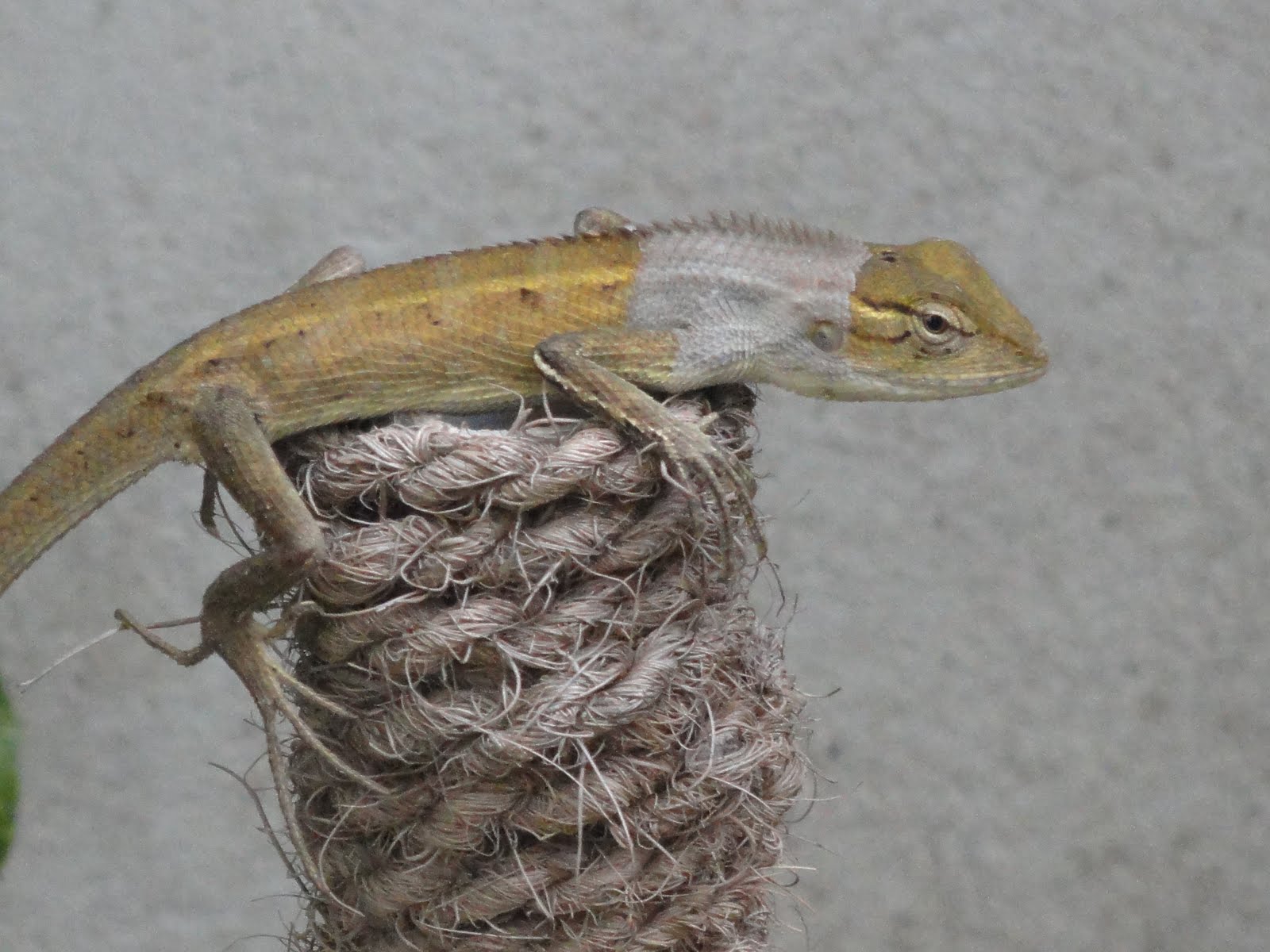
Guess who strayed into the house one sunny morning? A baby skink! If it hadn't come in I'd never have managed to take a photo like this one. Anyway after about ten shots I held out a newspaper for this baby to climb on. Then I took it outside where it disappeared amidst my plants!

 My garden lizards are going through their rite of passage...moulting! I found one on the branch of my mango tree where it certainly didn't want its privacy invaded. I understood.:)

And this one has shed more skin than the first one. Lizards shed skin in scraps often starting by a split down the back.

Monday, September 5, 2011

Sunbirds


Of all the birds that come to my yard, the sunbirds have been most elusive. I hear them calling as loud as ever but any slight movement from stealthy old camera-carrying me has them flying off like greased lightning. So thank God for the pentas that has made it possible for me to take these shots. If you look at the collage, you'll see the same bird in every picture. The one in the centre was taken through the window pane from the room that looks out to some of my plants. That's where they come to feed often.

Comparing Google images I've learned that the one on the collage is a female Purple Sunbird. Where is the colour purple was the first thought that came to my mind. Well, like the hummingbirds, the males have iridescent colours whereas the females are plainer. I have seen the purple sunbird in other parts of the city but never in my garden. The female, as you can see is olive above and yellow on the underside.


Going by the dark colour, this one could well be a male. I found it perched on a thin branch of one of my guava trees.


Here are some facts from Wiki. Sunbirds are small passerine birds belonging to the family Nectariniidae. The family is distributed throughout Afrca, southern Asia, and just reaches northern Australia. They feed mainly on nectar but also take insects and spiders when feeding their young. Flower tubes that bar access to nectar are simply punctured at the base near the nectaries. Fruit is part of the diet of some species. Their flight is fast and direct on their short wings. You can find more info here and here.

Here's another attempt by me to capture these beautiful birds through the window pane on my camera phone. If you click on the picture you'll see the yellow underside. See how small the sunbird is! The thin stem only swayed a wee bit. As I type , I can hear their vociferous voices outside. Maybe I'll get a better shot this time?!;)

Sunday, September 4, 2011

The Leopard Lacewing Butterfly


The other day I came across this beautiful butterfly on a justicia leaf. It gave me enough time to take these shots before it decided it'd had enough!! Although I had taken two blurry shots of this species two years ago, the photos were definitely not blog-worthy. The Leopard Lacewing/Cethosia cyane is found from India to southern China. According to Wiki, its range has expanded in the last few decades, and its arrival in the southern part of the Malay peninsula, including Singapore, is fairly recent.

My book of butterflies tells me that both sexes have a white band across black apical half of upper forewing. The white V-shaped markings on the scalloped edges of the wings make this butterfly most attractive!

Posted by Picasa

Saturday, September 3, 2011

Weekend Reflections/Floating candles

 Light is good from whatever lamp it shines.~ Author unknown


This week's reflection photo comes from these floating candles. To see the most beautiful posts on Weekend Reflections, visit James at   http://weekendreflection.blogspot.com/

Hope you all have a great weekend!

Saturday, August 27, 2011

Look Who's Snaked Its Way Up My Mango Tree!


The other day my neighbour called out to me saying that there was a snake on my mango tree. Although I looked hard, I couldn't really make out against the light of the afternoon sun (first picture). I ran to get my camera and got a few shots. I didn't dare get closer shots. It's the longest snake that I've seen in my garden/vicinity. It could well be a rat snake but I'm not too sure. Rat snakes are supposed to be one of the most common snakes in India. Their diet consists of rats and frogs. They are active during the day. And I was glad to find out that they are non-venomous.


As I clicked away, it started to move towards the next tree which was a guava tree. And then it disappeared amidst the thick foliage of another neighbour's mango tree. Thank goodness that my neighbour told me about the snake. I'd have merrily gone out to check the guavas as I usually do in the afternoons. It still gives me the shivers to think about coming so close to a snake!! It's not without taking a good hard look at the trees that I go and pick the fruits now!

Weekend Reflections


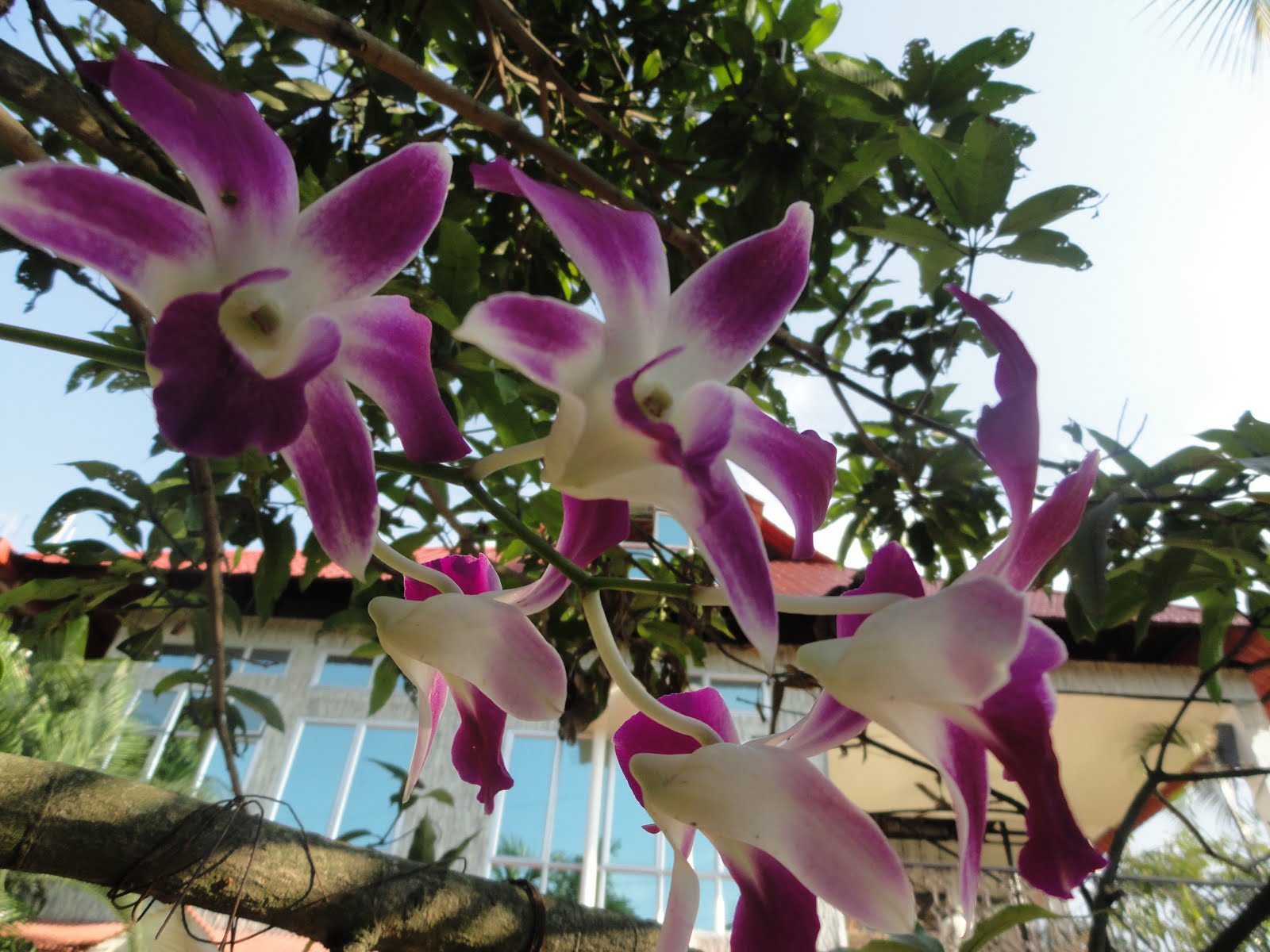
As Iwas photographing my orchids today, I realized that the same windows in my last post looked completely different. Today being a hot day, the blueness of the sky and those same palm trees wear a different look .

To see more reflection photos, visit James at  http://weekendreflection.blogspot.com/

Thank you for stopping by today.

Friday, July 1, 2011

Skyscape On A Windowpane


The changing colours of the sky reflected on our bedroom window. A coconut tree, a branch of a guava tree and a new structure coming up...all reflected on the pane. And of course, the sky!


To see the most delightful images on Weekend Reflections, visit James at http://newtowndailyphoto.blogspot.com
Posted by Picasa