Thursday, June 14, 2012

Nature Notes/Dragonflies


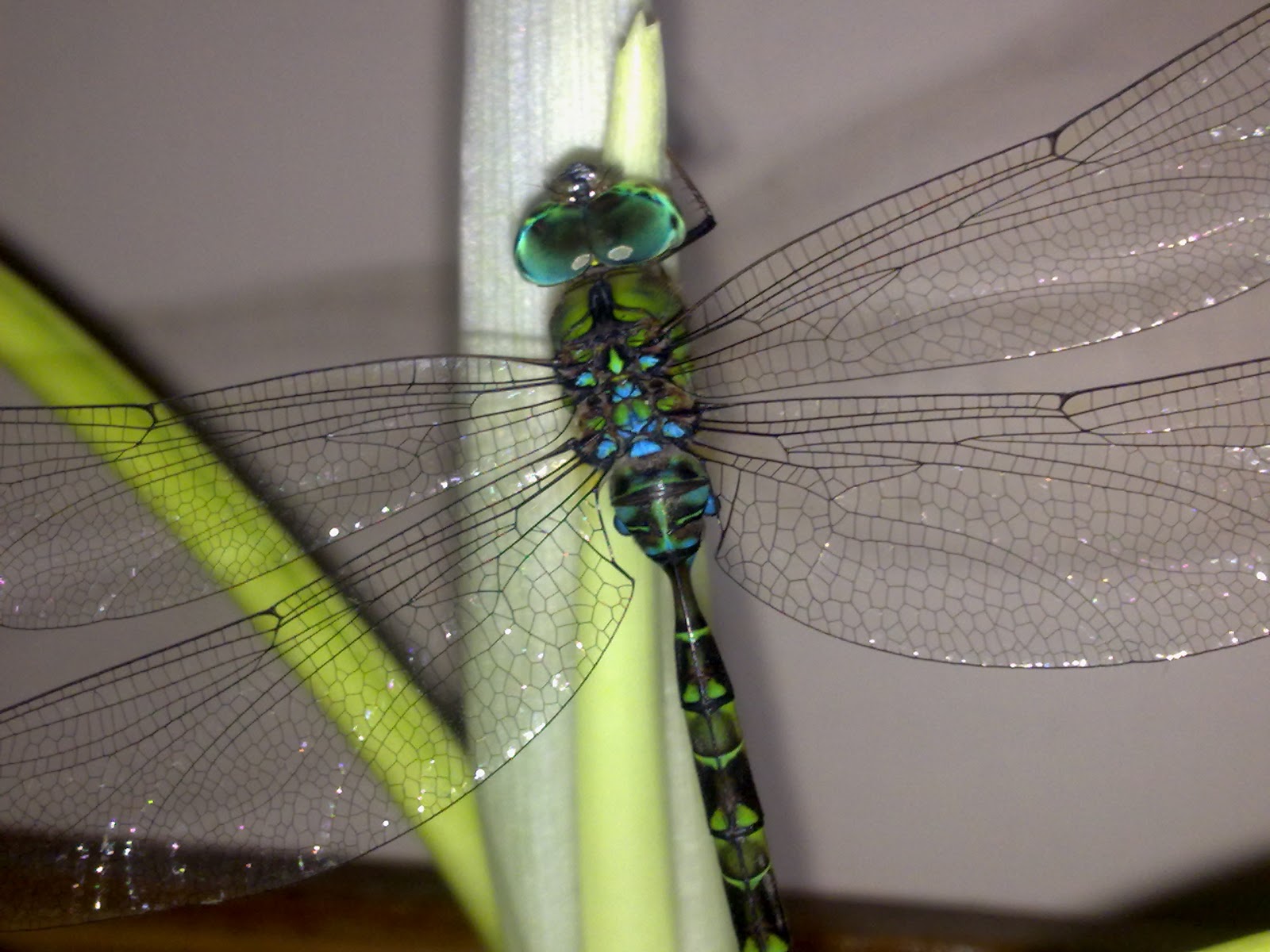
 Although I photograph a whole lot of dragonflies every summer, I have never seen or photographed dragonfly exuvia. Below is the photo that I clicked yesterday. At first glance I thought it was an insect I hadn't seen before. It was only after I compared Google images that I knew it was dragonfly exuvia. It was on the underside of an anthurium leaf.


And here's what I found a few days ago on one of my plants. The blue/green combination of colours was most striking.


And a similar one that I found this morning on my cucumber trellis. i couldn't capture that iridescence in today's cloudy rainy weather.


For more posts in the world of nature, visit the home of Nature Notes.

Wednesday, June 13, 2012

Backyard Birds For WBW


Continuing with my series of regular backyard birds, the first is the picture of a kingfisher perched on the top of my terrace. 


The Spotted Doves spend a lot of time amid my plants. Here's one foraging amid my small patch of ginger while the other looks on. They are usually seen in pairs.


The Common Indian Myna was busy pecking at some of the ripening berries on this tree while a pair of White-breasted water hens were taking a leisurely walk.
And this purple sunbird  was feeding amid the lilies growing wild near the roadside.

To see more of our feathered friends, visit World Bird Wednesday.

Thursday, June 7, 2012

Nature Notes/More Winged Visitors


I'd never given the blooms of this yellow vein eranthemum much thought. The foliage being showy, gets all the attention. This flowering shrub does well in a sunny location. It's the third year that it's blooming and it's only recently I noticed the steady stream, or should I say wings:) of visitors? A blue-eyed bee paid a quick visit this afternoon. So did the other two butterflies pictured below. All along it's been the pentas that's attracting the most number of winged visitors. But I'm glad these small speckled blooms are doing their fair share.
Can you spot the tiny skipper?

Feeding time for the Grass Yellow

I usually see a lizard or two lying in wait for their prey amid the leaves and the blooms. In my small garden this plant attracts the most varied wildlife (including the sunbirds) and it's always such a joy to photograph them all. 


The next two pictures show the bees that come regularly.


In last week's post, I had posted a picture of the Peacock Pansy butterfly. This afternoon I found a Lemon Pansy resting on one of the bamboo stakes in the blue salvia patch. 
Another zinnia blooms and a tiny green spider finds its home!!


To see more posts by other participants, visit the home of Nature Notes at Rambling Woods.

Tuesday, June 5, 2012

WBW/Crows & Sparrows


For today's WBW I'm posting pictures of birds we see on a daily basis. In sunshine or rain, they are ever present! The house crow/Corvus splendens is black with a grey neck and breast. The depth of colour in the plumage and the thickness of the bill varies from region to region. With an omnivorous diet they can survive on anything edible that they find near human habitation. The sparrows in this collage were taking a breather after pecking at the purslane that have sprung up all over my yard.
A crow's nest on our mango tree


To see more of our feathered friends, visit the home of World Bird Wednesday.

Enjoy and Participate!

Wednesday, May 30, 2012

Nature Notes/ A Busy Yard!

My little clump of blue salvia is attracting several butterflies. I caught this Peacock Pansy butterfly through the window pane on a hot and sunny afternoon a few days ago.
My potted Maidenhair fern has a rather colourful visitor!

While weeding in the garden I came across this pale frog on a day lily plant. I think I'm seeing more frogs this year. Although I don't know much about frogs, it's always nice to find a new one amid my plants!

Last night's shower must be the reason the damselflies were around this morning. I saw three of them today but they are so tiny that it's difficult to see the actual colours in my photos. 

One of those pretty blues on the blue salvia. This was also photographed today.

 
And now a collage of the latest finds around my house and yard.. Clockwise...a green spider on the floor of the corridor leading to my kitchen, a green insect on the tender leaf of the Cardboard Palm, a tiny beetle on the wall, and a newly opened zinnia (I don't think I've grown this shade before).

To see more on what's going around in the world of nature, visit Nature Notes at Rambling Woods.

Wednesday, May 23, 2012

Nature Notes/In My Area


A closer look at the head
They are everywhere! It's caterpillar season!:) But rather than post every hairy scary one that I find, I decided one colourful one is enough for today's post! Aren't the patterns amazing? I found it on the leaf of the Rangoon Creeper/Quisqualis indica.
Rangoon Creeper growing near on the western side of our compound
A short note about this plant...the unique thing about this plant also known as the Chinese Honeysuckle is that the blooms are white when they first appear. Then they turn to a light shade of pink. When this change takes place, dark pink stripes form at the back of the petals. Finally the whole flower turns to a dark shade of pink before withering away. So the vine has all the colours on display.

I caught the setting sun the other day from the terrace. The way the trees lit up on that low hill on the western horizon was something I hadn't captured before. 
The White-breasted water hen

And the water hen, yes the white-breasted one, was kind enough to pose for me. If only the heat had that kind of effect on all the other birds too!!
There's so much happening all the time in the world of nature and I'm so glad to be able to share my observations on Nature Notes. For more posts that you'll surely love to read, visit Michelle at Rambling Woods, the home of Nature Notes.

Purple Sunbird


Not the clearest pictures but I did my bit of crouching-tiger-hidden-dragon moves to get these shots.:) Sunbirds are small passerine birds belonging to the family Nectariniidae. The family is distributed throughout Africa, south Asia, and northern Australia. They feed mainly on nectar but also take insects and spiders when feeding their young. Flower tubes that bar access to nectar are simply punctured at the base near the nectaries. Fruit is part of the diet of some species. Their flight is fast and direct on their short wings. According to Wiki, the sunbirds have counterparts in two very distantly related groups: the hummingbirds of the Americas and the honeyeaters of Australia. The resemblances are due to convergent evolution brought about by a similar nectar-feeding lifestyle. Some sunbird species can take nectar by hovering like a hummingbird but usually perch to feed.


My last WBW post had the female of this species. A rather dull combination if you compare this metallic dark blue, appearing to be almost black from a distance. To see more of our feathered friends, visit the home of World Bird Wednesday.